![[removal.ai]_tmp-608c718a511a1](https://www.vanessalancaster.com/wp-content/uploads/2021/04/removal.ai_tmp-608c718a511a1.png)

Enterprise Learning Ecosystems & Governance
Click Photos for full project
Testimonials
-
Vanessa is my go-to resource for our most challenging initiatives. She has an incredible ability to quickly understand complicated workflows, navigate complex requirements, and transform them into engaging, polished learning experiences. Whether developing training on highly sensitive topics or tackling technically complex content, she approaches every project with exceptional care, cultural awareness, empathy, and sound judgment.

-
Vanessa was instrumental in architecting a five-day public healthcare train-the-trainer program for our multimillion-dollar USAID project. Her ability to translate complex clinical requirements into a scalable national standard was a key driver of our success.

-
Vanessa is a trusted partner with a deep understanding of the way people learn, and she finds clever ways to communicate complex information to anyone. She understands that sometimes it's a lack of education that prevents someone from living a healthy life, and she uses her passion for quality and advocacy to reduce that barrier. We've been lucky to have her.

Catching AI Hallucinations in a 600-Course Compliance Remediation
Lead Learning Experience Designer | Vector Solutions
Mid-project, I identified a pattern of AI-generated errors in compliance content that subject matter expert reviewers were consistently missing. I escalated it to the VP, was named project lead, and built the reviewer handbook that closed the gap across all 600 courses.
The mandate
I joined a team of learning experience designers evaluating and restructuring 600 courses for language compliance. The work was distributed across multiple LXDs, with subject matter experts reviewing content for accuracy.
What I found
The review process assumed a specific kind of error, the kind humans make. AI-assisted content produces a different kind of errors that are often fluent, confidently stated, structurally plausible, and wrong. Because it reads as authoritative, it survives review by experts who are scanning for the errors they're trained to expect.
I began catching these consistently. In compliance content, a hallucinated statutory threshold or invented reporting timeline is instruction that could lead a mandated reporter to act unlawfully.
What I did
Escalated with evidence, bringing the pattern to the VP and my director rather than quietly correcting individual instances
Was named project lead on the remediation mid-stream as a result
Built a reviewer handbook for subject matter experts: what AI-generated errors look like in compliance content, why fluency defeats normal review instincts, and the specific verification steps to catch them
Operationalized it across the project, turning one person's pattern recognition into a repeatable QA standard the whole team could apply
Why it matters
This is AI governance in practice. Organizations adopting AI for regulated content are discovering that their existing review processes were designed for human error and don't detect machine error. The gap isn't the technology, it's the QA layer around it. Building that layer, and training experts to use it, is the work.
Multi-State Compliance Architecture for Safety & Security Training
Lead Learning Experience Designer | Vector Solutions
I design the national and state-specific compliance courses behind mandated safety training used across K–12, higher education, construction, and commercial sectors in the U.S. and Canada, including roughly 30% of the professional development catalog at a major urban school district and the full training path for California school security guards.
The mandate
Compliance training has a structural problem: the law is not the same in every state. A mandated reporting course that satisfies federal expectations will not satisfy California's specific statutory requirements, and building fifty unrelated courses is neither maintainable nor affordable. Someone has to design the architecture that lets one instructional model carry many legal variants without losing accuracy or instructional quality.
That is the work I lead.
The architectural win
National-to-state design pattern
I built the national mandated reporting course first, establishing the instructional spine — scenarios, decision points, and the judgment a reporter actually has to exercise. I then architected state-specific versions carrying each jurisdiction's own definitions, thresholds, timelines, and reporting pathways. The pattern is now how I approach compliance topics generally, and I've applied it across Title II, Title IX, and numerous other regulatory domains.
Regulatory translation
Each variant requires reading the actual statute and reconciling it against the instructional design — what counts as reasonable suspicion here, who is a mandated reporter here, how many hours until the report is due here. That reconciliation is invisible in the finished course and is most of the work.
High-stakes subject matter
Mandated reporting, Title IX, Title II, suicide prevention and student mental health, child protection, food allergy safety and school nutrition, security and life safety. Content where an instructional shortcut becomes a legal exposure, and where the learner may have personal history with the subject.
Trauma-aware instructional design
I apply educational psychology to content people don't want to take, at the end of a shift, because they're required to. That means designing for real cognitive load, emotional safety, and the completion rates a district actually reports on.
The outcome
- Approximately 30% of the professional development catalog at a major urban school district
- The complete training path for California school security guards
- Multi-state compliance variants across mandated reporting, Title IX, and Title II
- Reach in the millions of learners annually across the U.S. and Canada
- Best Storytelling Content, 2nd Annual Vector Content Awards (2025), for a stress management framework designed to increase associate resilience and engagement
Enterprise AI Architecture for Frontline Resilience: A Strategic Roadmap for Senior Living Governance
Strategic Prototype -2026
Overview
Architected a 13-page forensic roadmap designed to stabilize high-turnover frontline populations through AI-enabled performance support. This framework bridges the gap between complex regulatory requirements and tactical calm in the field, providing a scalable blueprint for operational integrity for 4500+ associates..
The challenge
The core issue was not a lack of content. It was that learning often lived too far away from the workflows where judgment, communication, and service actually happen. Courses and manuals existed, but they did not fully support frontline teams and managers in real time.
My approach
The concept was built with a forensic audit mindset: start by mapping the ecosystem, identifying friction points, and understanding where learning helped versus where it created noise.
From there, the architecture focused on three layers of support:
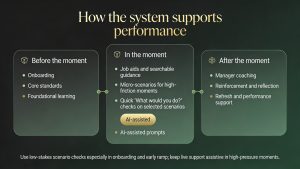
Before the moment: onboarding, standards, foundational learning.
In the moment: job aids, searchable guidance, AI-assisted prompts, micro-scenarios, knowledge checks (what would you do?)
After the moment: coaching, reinforcement, reflection, and refresh cycles.
What I designed
A strategic learning framework
An experience model connecting formal learning, workflow support, and coaching
Priority enterprise use cases
A governance model for trust, validation, and version control
A phased rollout roadmap
A 30-60-90 implementation view
Sample artifacts showing how learning becomes usable at the point of need
Sample artifact
One artifact demonstrated how an AI-assisted frontline job aid could support a sensitive real-time interaction through immediate steps, tone guidance, a short micro-scenario, and a linked manager coaching note.
This showed the shift from static training content to in-the-moment performance support.
What this demonstrates
This use case highlights systems thinking, performance consulting, governance design, and the ability to translate strategy into practical learning tools.
It reflects how learning architecture can connect business goals, frontline needs, and scalable support design in one model.
Strategic Health & Conservation Initiative: Nyungwe National Park (USAID)
Cross-Sector Curriculum Architecture | DAI & Jhpiego (an affiliate of Johns Hopkins)
Click photo for full project.
The mandate
Served as the specialized Lead Instructional Architect for the workplace health component of the Nyungwe Nziza Project, a multi-million dollar USAID initiative implemented by DAI and Jhpiego to reconcile biodiversity conservation with community health stability.
The architectural win
Comprehensive Workplace Health Curriculum
A 100-page Comprehensive Workplace Health Curriculum, delivered as a five-day train-the-trainer program for the public health component of a $12.5M USAID ecotourism initiative in Rwanda.
Delivered in-country to tea farm managers, WWF representatives, and community health workers, cascading to more than 15,000 tea farmers
Systems integration
Engineered a learning framework that bridged the gap between Conservation Economics(DAI’s mission) and Public Health Outcomes (Jhpiego’s mission), creating a unified "Culture of Health" for workers in a protected ecological zone.
Subject matter governance
Directed the translation of complex clinical and environmental health protocols into accessible, high-impact performance support for a diverse, multi-lingual workforce.
The outcome
Delivered a scalable, government-validated educational asset that institutionalized health safety standards across the region's economic zone.
Global recognition & honors
Best Overseas Tourism Project Globally (2012)
Nyungwe Nziza project recognized as Best Global Project by the British Guild of Travel Writers (tourism and conservation)
Nyungwe Nziza project honored with the SATW Phoenix Award for conservation and community excellence
National Geographic Traveler "Best Trip" (2014)
Nyungwe Nziza project was named a global benchmark for sustainable destination development
AI Enablement & Retention Architecture: Strategic Onboarding for Global Startups
Strategic Prototype, 2026
Engineered a 6-phase forensic onboarding framework for an emerging AI Voice platform to mitigate churn and accelerate user proficiency. By architecting the time-to-value bridge, I transformed complex AI technical requirements into a streamlined education ecosystem that directly protected enterprise revenue and customer lifetime value.
Their product was technically impressive, but their existing educational patterns left users uncertain, especially around sensitive use cases such as fraud and billing.
Objective:
My goal was to demonstrate how an evidence based education strategy could reduce perceived risk, improve mental models, and ultimately support a path from pure acquisition growth toward sustainable ARR expansion driven by retention and higher LTV.
What I created:
A 6-form “friction buster” video framework that systematically addressed key user anxieties (e.g., fraud, authenticity, data use) through short, targeted, emotionally aware narratives rather than generic feature tours.
An 11-column planning model (spreadsheet) that linked user jobs to be done, emotional states, scenarios, scripts, delivery channels, and success metrics, enabling the team to generate and prioritize education assets at scale.
Prototype demo videos using a realistic “I think there’s fraud on my account” scenario, combining their AI agent, on-screen expert paths, and storytelling elements to show how a single, well-designed interaction could both reassure users and reduce support load.
A revised launch narrative for a new feature that shifted the emphasis from internal architecture to user value, clarity, and real-world use cases.
Potential impact:
While this work remained speculative, the strategy was designed to:
Decrease early-stage user confusion and perceived fraud risk.
Reduce load on human support by clarifying expert paths up front.
Support long term ARR growth by focusing on trust, retention, and expansion—not just acquisition.
My role:
I served as an independent education strategist and content systems designer, responsible for diagnosing educational gaps, designing frameworks and models, and producing high-fidelity prototypes for the team to test and extend.

Strategic Forensic Recovery: USAID (Pakistan) — Pre-STEP Initiative
National Education Reform & International Stakeholder Management
Click the image to read the USAID Federal Audit Trail (Pre-Step Initiative)
Media: USAID expands support for teacher training
The mandate
Retained as the Project Lead to perform a high-speed Forensic Recovery of a stalled $300,000 USAID grant. The mission required architecting and executing a two-week intensive faculty development residency for 24 Pakistani Teacher Educators, including a high-level strategic summit in Washington, D.C.
The architectural win
Crisis governance
Re-engineered the curriculum and logistical roadmap from a state of total stagnation to a successful launch within a 6-week high-pressure window.
Federal compliance mastery
Directed all budgetary allocation, documentation, and reporting to meet rigorous USAID federal standards, ensuring 100% audit-readiness.
Cross-cultural strategic design
Leveraged Educational Psychology to architect a curriculum and logistical environment that reconciled complex dietary, cultural, and pedagogical requirements.
The outcome
Successfully delivered a zero-failure program that institutionalized modern teacher-education standards, resulting in the highest-level compensation tier for the project leadership.
"Vanessa’s leadership was essential to the success of the Pakistan Teacher Education project; without her professional skills and dedication, it would not have succeeded. She was vital in coordinating complex schedules and managing the graduate team. Her performance in all matters was exemplary."
~ Joe Bishop, EMU Professor, Co-Director & Administrator, USAID Pakistan Pre-STEP Study Tour
Click to read letter of recommendation here

Editorial Governance & Intellectual Architecture: Educational Studies Journal, Taylor & Francis
Assistant Editor to Editor-in-Chief Dr. Rebecca Martusewicz
Served as Assistant Editor for the premier journal of the American Educational Studies Association (AESA), managing the editorial pipeline and peer-review governance for a global audience. Overseeing a bimonthly publication schedule (six issues per year), I collaborated with the Editor-in-Chief to maintain the systemic rigor and intellectual integrity of academic research.
This role required a forensic eye for detail and the ability to manage complex, high-velocity production cycles across diverse scholarly teams.
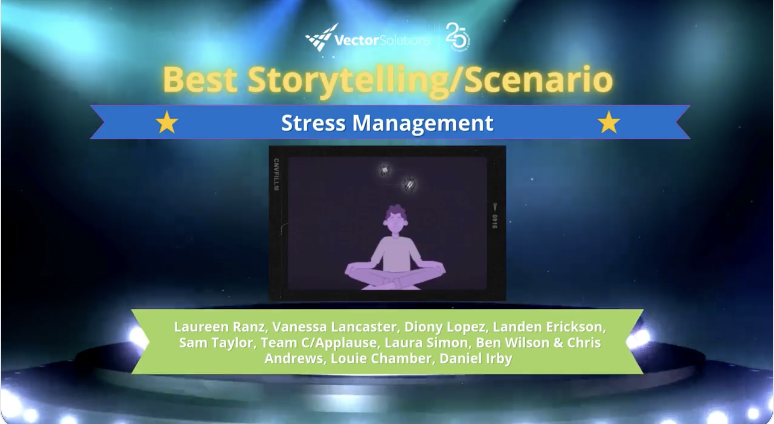
Best Storytelling Content (2025)
Issued by Vector Solutions · Mar 2025
Click photo to read more about award
Internal excellence recognition: Our team was awarded Best Storytelling in the 2nd Annual Vector Content Awards (2025) for a specialized Stress Management framework designed to increase associate resilience and engagement.

Associate Online Content Editor - Psychology Today 2021-2023
Click photo for full list of posts/clicks each received for Dec 2021
Behavioral Engagement & Content Governance at Scale
Enterprise scale
Managed strategic content curation for a global platform reaching millions of daily users, optimizing for high-speed engagement and retention.
Psychological governance
Applied Educational Psychology to ensure clinical research was translated into intuitive, high-impact digital experiences.
Operational integrity
Directed a complex contributor ecosystem, maintaining rigorous standards for brand consistency and audience trust.

Strategic Behavioral Architecture: The Lorna Young Foundation Inclusive Innovation & Curriculum Governance for Neurodivergent Youth
Inclusive Innovation & Curriculum Governance for Neurodivergent Youth
Click the photo to learn more about the Not Just Us initiative
The mandate
Architected a national entrepreneurial framework for disadvantaged, gifted, and twice-exceptional (2e) youth. The mission was to translate the Lorna Young Foundation's elite fair-trade business logic into a scalable educational ecosystem for high-potential students facing systemic barriers.
The architectural win
Evidence-based pedagogy
Engineered a National Facilitator Manual grounded in advanced Educational Psychology and forensic needs-assessment data.
Cognitive scaffolding
Designed specialized instructional strategies that reconciled the unique profiles of 2e learners, turning complex business models into accessible, high-impact training.
Systems impact
Field-tested learning materials to ensure operational integrity and sustainable scaling within the foundation's Not Just Us national enterprise network.
The outcome
Successfully institutionalized a repeatable, research-backed model for Inclusive Entrepreneurship, enabling neurodivergent youth to translate complex ethical trade logic into sustainable startup ventures.
"Vanessa is a startling person to work with. Not just in terms of her area of expertise, but in terms of her passion and knowledge, her dedication, and sheer SPEED that she cuts through stuff to get to the nub of something. Her contribution to the work of the Lorna Young Foundation's 'Not Just A Social Enterprise' initiative has been invaluable."
~Christina Longdon, Founder Lorna Young Foundation
Click Here for Letter of Reference from The Lorna Young Foundation

National Strategic Initiative: UK Department of Education Advocacy, Curriculum Governance & High-Potential Student Architecture (2013)
Click photo for full project.
In partnership with Potential Plus UK and the Lorna Young Foundation, I co-architected a national framework to identify and support high-potential learners across the UK education system.
The impact
Mass-scale distribution
Authored and edited the Guide to Higher Learning Potential, which was distributed to 30,000+ UK educational institutions to standardize excellence in gifted education.
Governance & standardization
Established a high-fidelity curriculum standard used by administrators and educators nationwide to reconcile academic rigor with individual cognitive development.
Stakeholder alignment
Managed the integration of diverse educational philosophies into a single, cohesive strategic resource for the Department of Education.
The outcome
Successfully implemented a national advocacy tool that redefined mastery for the highest-potential student demographic in the UK.

Mobile Comply Curriculum ~ Mobile App Development
Click the photo to see full project
Mobile Comply, a provider of education and certification programs for connected transportation systems, autonomous vehicles, and automotive cybersecurity, commissioned Vanessa to architect and deliver mobile app development and security curriculum.
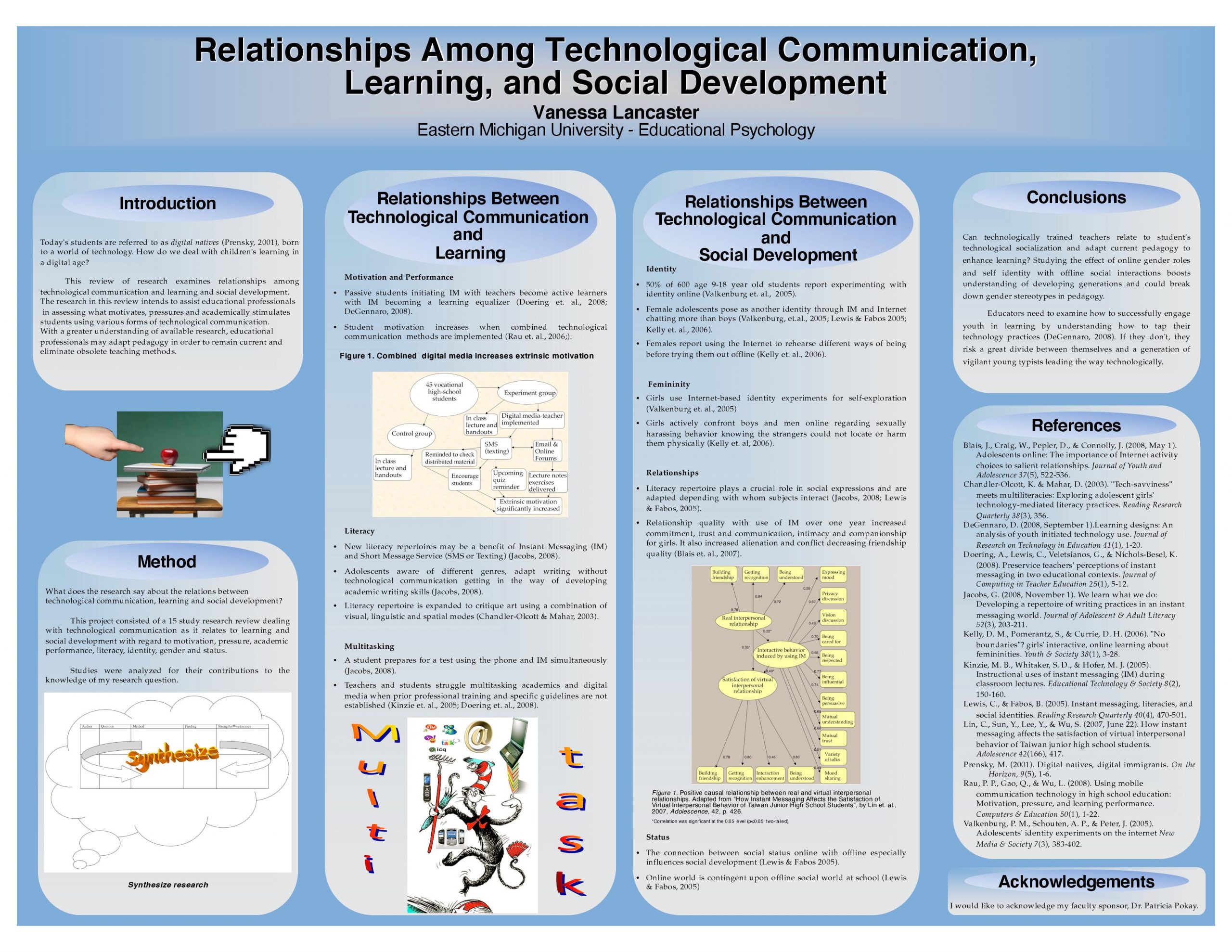
Graduate Research Fair, EMU, 2012
Click the photo to see the full poster
Graduate Research Fair – Relationships Among Technological Communication, Learning, and Social Development
Poster presented at Eastern Michigan University Graduate Research Fair 2012
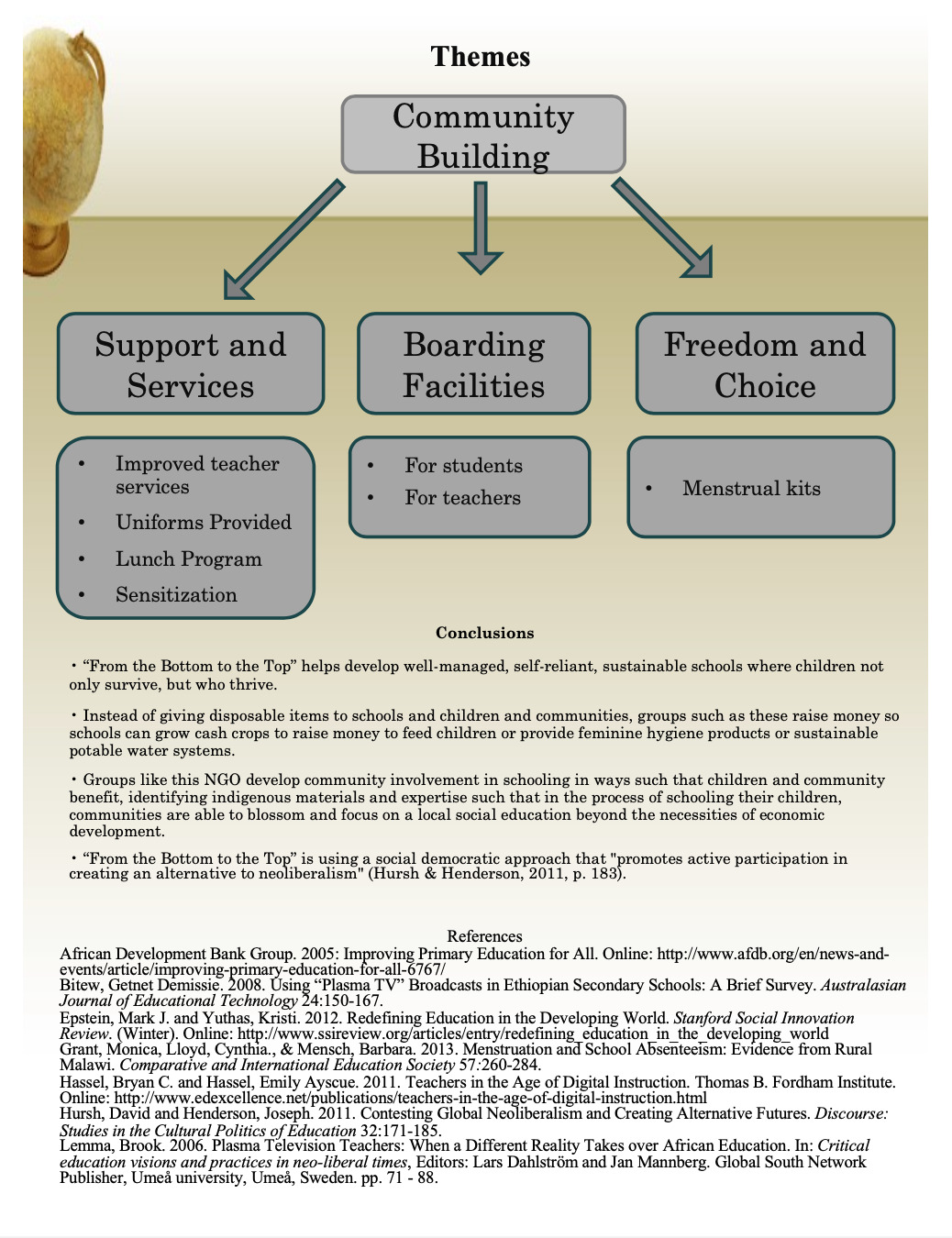
American Educational Studies Association (AESA) and Comparative & International Education Society (CIES)– 2013
Lead Researcher & First Author
Click the photo to read the handout
Assessing the Potential for Sustainable Education in Uganda
Presented at the CIES Annual Conference. (Co-authored with Dr. Joe Bishop, EMU).
Grounded School Choice in Uganda: Community Building from the Bottom to the Top
Presented at AESA Annual Conference
Professional Writing
Professional Presentations
Reference Letters
Click Photos For Reference Letter